

The Hidden Cost of “Free”: How Finance Apps Turn Your Vulnerability Into Their Profit
“You will discover how wonderfully small trifling expenses mount up to large sums.”
— Benjamin Franklin, Advice to a Young Tradesman, 1748
Franklin understood something that the modern fintech industry has turned on its head. He was talking about the danger of small, unnoticed expenses quietly draining your resources. Today’s “free” financial apps have discovered the same truth — and built a billion-dollar business model around it.
Not to help you. To profit from you.
SubLedger exists because we believe you deserve a tool that actually works for you — one that helps you see those small, mounting expenses clearly, without trading your financial privacy to get there.
The “Free” Business Model Is Not What It Seems
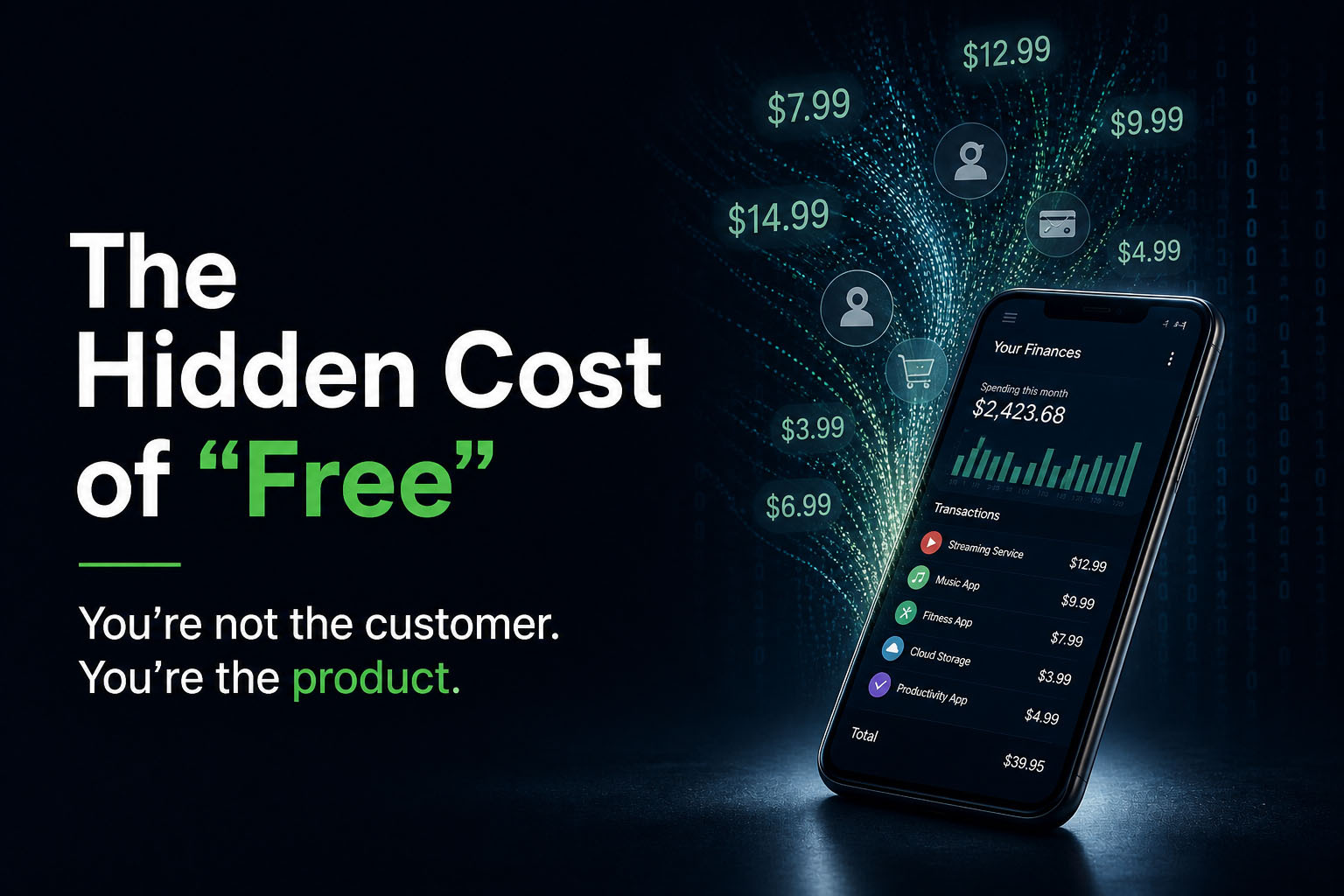
When a financial app is free, you are not the customer. You are the product.
Free finance apps are built on a simple equation: collect as much financial data as possible from as many users as possible, then monetize that data through targeted advertising, partner referrals, credit offers, loan products, and data licensing. The more financially stressed or vulnerable the user, the more valuable they become to the lenders and creditors these platforms are quietly steering them toward.
This isn't a conspiracy theory. It is a business model, disclosed in terms of service that almost nobody reads.
The Mint Collapse: A Case Study in Misplaced Trust
For over a decade, millions of people trusted Intuit’s Mint with their most sensitive financial information — bank logins, transaction histories, spending patterns, debt levels. They linked their accounts because Mint made it easy and it was free.
In January 2024, Intuit shut Mint down. Users were redirected to Credit Karma — another Intuit property — which is primarily a credit monitoring service that earns money by matching users with credit cards, loans, and financial products. The platform that knew everything about their financial lives was gone. The data, however, was not.
Mint users didn’t lose a budgeting tool. They lost the illusion that their data was ever really theirs.
Who Gets Hurt Most
The people most harmed by this model are those least positioned to absorb the damage: people who are already financially vulnerable.
- People recovering from medical debt or illness
Medical crises don’t just drain savings — they introduce a flood of new subscriptions and recurring charges for telehealth, prescription delivery, insurance supplements, and more. These are exactly the users most targeted by credit offers they can’t afford. - People navigating divorce
Divorce splits finances, creates new individual subscription needs, and often introduces financial tracking for the first time. It’s a moment of acute financial vulnerability — and acute data value. - People just starting out
Young adults and first-time earners are statistically the most likely to sign up for “free” tools without reading the terms. They are also the most valuable long-term data targets. - People in recovery — financial or otherwise
Anyone rebuilding their financial life is deeply motivated to get control of their spending, making them highly engaged users of financial tools — and highly attractive to the advertisers those tools serve.
What a Real Tool Looks Like
SubLedger was built after a personal experience that felt all too familiar: an unexpected subscription charge appeared on a statement, quietly draining money that could have gone somewhere meaningful. The question it raised wasn’t just “what is this charge?” It was “why is there no simple tool to help me see all of these things in one place, without handing over my banking credentials or my financial life story?
There wasn’t one. So, we built it.
Our mission is straightforward: give people a real tool to see and control the small recurring expenses that quietly add up — without requiring them to give up the financial privacy that makes them vulnerable in the first place.
That means:
- No bank account linking.
- No selling your data to advertisers, lenders, or anyone else.
- No hidden business model where your financial stress becomes someone else’s revenue.
- Tools for real life, including shared family subscriptions, employer reimbursements, and the subscriptions you’ve simply forgotten about.
- A straightforward, honest subscription you control.
Franklin Was Right. The Small Things Matter.
Subscriptions are the new pennies. They're small enough to ignore individually and significant enough to matter enormously in aggregate, a $12.99 streaming service here, a $7.99 app there, a $14.99 membership you meant to cancel. Franklin’s observation holds: the small, trifling expenses mount up to large sums.
You deserve to see them clearly. You deserve a tool built to help you, not to profit from your financial picture.
That is why SubLedger exists. And that is why we will never change it.
Take control of your subscriptions — without giving up your privacy.
TRY SUBLEDGER FREE